 July 06, 2026 - BY Admin
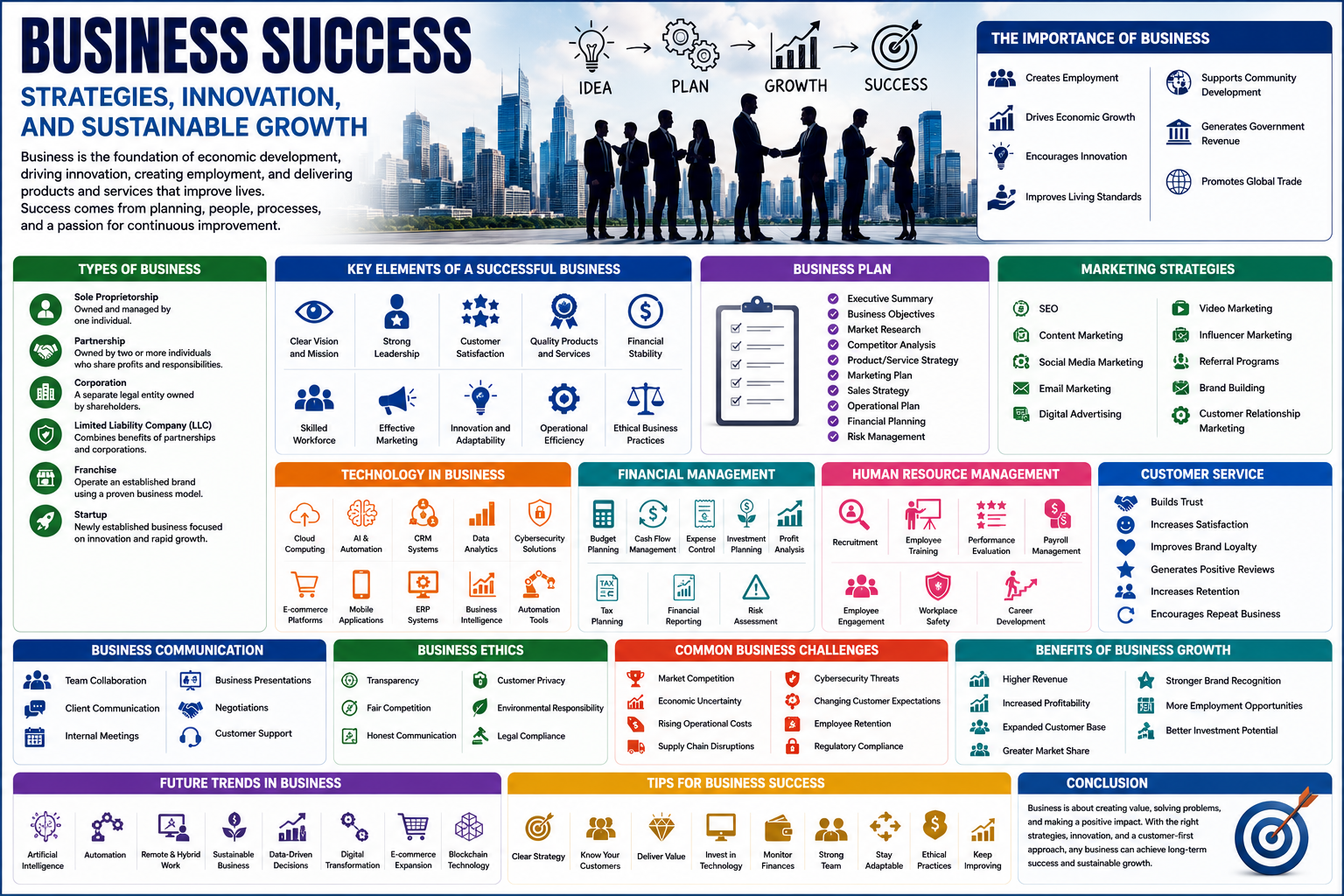
Strategies, Innovation, and Sustainable Growth
Introduction
Business plays a vital role in shaping economies and improving society. From small startups to global enterprises, businesses create value by providing products and services that meet customer needs. In today's rapidly changing world, organizations must embrace innovation, digital transformation, and customer-centric strategies to remain competitive and achieve sustainable growth.
What Is Business?
Business is the activity of producing, buying, or selling goods and services to generate revenue and create value for customers. Every business operates with the objective of achieving long-term growth while meeting market demands.
Importance of Business
Businesses contribute significantly to society by:
- Creating employment opportunities
- Driving economic growth
- Encouraging innovation
- Improving living standards
- Supporting community development
- Generating government revenue through taxes
- Promoting global trade
Types of Business
1. Sole Proprietorship
A business owned and managed by a single individual.
2. Partnership
A business jointly owned by two or more individuals who share profits and responsibilities.
3. Corporation
A separate legal entity owned by shareholders with limited liability.
4. Limited Liability Company (LLC)
A flexible business structure combining the benefits of partnerships and corporations.
5. Franchise
A business model where entrepreneurs operate using an established company's brand and business system.
6. Startup
A newly established business focused on innovation and rapid growth.
Key Elements of a Successful Business
Every successful business is built on several essential components:
- Clear vision and mission
- Strong leadership
- Customer satisfaction
- High-quality products and services
- Financial stability
- Skilled workforce
- Effective marketing
- Innovation and adaptability
- Operational efficiency
- Ethical business practices
Business Planning
A well-prepared business plan typically includes:
- Executive summary
- Business objectives
- Market research
- Competitor analysis
- Product or service strategy
- Marketing plan
- Sales strategy
- Operational plan
- Financial planning
- Risk management
Marketing Strategies
Successful businesses use multiple marketing channels, including:
- Search Engine Optimization (SEO)
- Content Marketing
- Social Media Marketing
- Email Marketing
- Digital Advertising
- Video Marketing
- Influencer Marketing
- Referral Programs
- Brand Building
- Customer Relationship Marketing
Technology in Business
Modern businesses rely on technology to improve efficiency through:
- Cloud Computing
- Artificial Intelligence (AI)
- Customer Relationship Management (CRM)
- Enterprise Resource Planning (ERP)
- Business Intelligence
- Automation Tools
- Data Analytics
- Cybersecurity Solutions
- E-commerce Platforms
- Mobile Applications
Financial Management
Effective financial management includes:
- Budget planning
- Cash flow management
- Expense control
- Investment planning
- Profit analysis
- Tax planning
- Financial reporting
- Risk assessment
Human Resource Management
Employees are the backbone of every successful business. HR functions include:
- Recruitment
- Employee training
- Performance evaluation
- Payroll management
- Employee engagement
- Workplace safety
- Career development
Customer Service
Excellent customer service helps businesses:
- Build trust
- Increase customer satisfaction
- Improve brand loyalty
- Generate positive reviews
- Increase customer retention
- Encourage repeat business
Business Communication
Effective communication supports organizational success through:
- Team collaboration
- Client communication
- Internal meetings
- Business presentations
- Negotiations
- Customer support
Business Ethics
Ethical businesses focus on:
- Transparency
- Fair competition
- Honest communication
- Customer privacy
- Environmental responsibility
- Corporate social responsibility
- Legal compliance
Common Business Challenges
Businesses may encounter challenges such as:
- Market competition
- Economic uncertainty
- Rising operational costs
- Supply chain disruptions
- Cybersecurity threats
- Changing customer expectations
- Employee retention
- Regulatory compliance
Benefits of Business Growth
Growing businesses often experience:
- Higher revenue
- Increased profitability
- Expanded customer base
- Greater market share
- Stronger brand recognition
- More employment opportunities
- Better investment potential
Future Trends in Business
The future of business is shaped by:
- Artificial Intelligence
- Automation
- Remote and hybrid work
- Sustainable business practices
- Green technology
- Data-driven decision-making
- Personalized customer experiences
- Digital transformation
- Blockchain technology
- Global e-commerce expansion
Tips for Business Success
- Develop a clear business strategy.
- Understand your target audience.
- Deliver consistent value to customers.
- Invest in technology and innovation.
- Monitor financial performance regularly.
- Build a strong and motivated team.
- Stay adaptable to market changes.
- Prioritize customer satisfaction.
- Maintain ethical business practices.
- Continuously improve products and services.
Conclusion
Business is much more than earning profits—it is about creating value, solving problems, and contributing to society. Organizations that combine innovation, strategic planning, customer focus, and ethical leadership are better positioned for long-term success. As markets continue to evolve, businesses that embrace technology, sustainability, and continuous improvement will remain competitive and achieve sustainable growth.