 June 15, 2026 - BY Admin
The Art of Design: Creating Experiences That Inspire and Connect
Introduction
Design plays a vital role in shaping the way people interact with the world. From websites and mobile applications to architecture and product packaging, design influences perception, usability, and emotions. Great design not only looks appealing but also delivers functionality and value.
What Is Design?
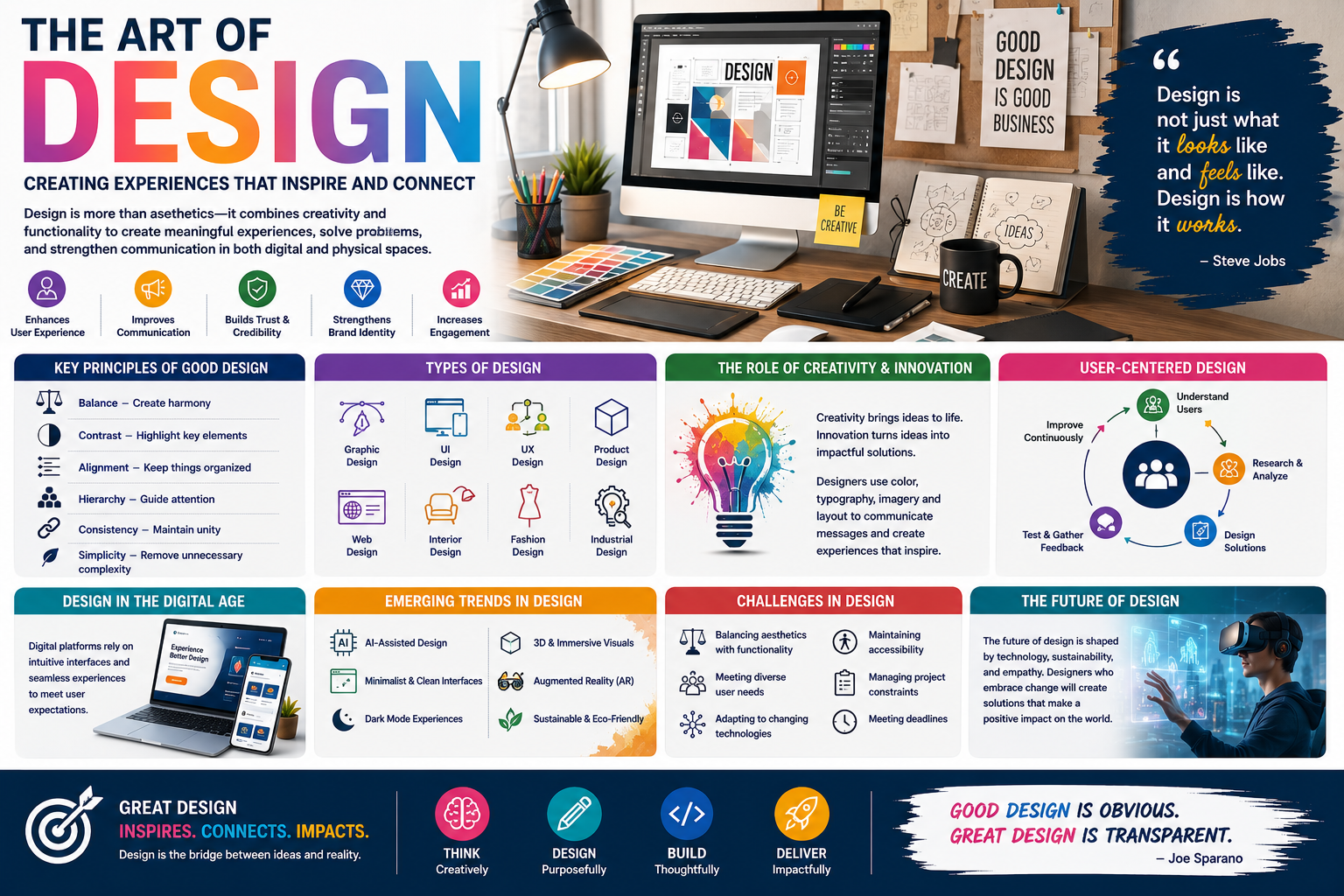
Design is the process of planning and creating solutions that meet user needs while balancing creativity, usability, and purpose. It combines art, technology, and problem-solving to produce experiences that are both attractive and effective.
Importance of Design
Effective design contributes to success in many ways:
- Enhances user experience
- Improves communication of ideas
- Builds trust and credibility
- Strengthens brand identity
- Increases customer engagement
- Solves complex problems creatively
Key Principles of Good Design
Successful design is often guided by fundamental principles such as:
- Balance: Creating visual harmony and stability
- Contrast: Highlighting important elements
- Alignment: Organizing content clearly
- Hierarchy: Guiding user attention effectively
- Consistency: Maintaining a unified experience
- Simplicity: Removing unnecessary complexity
Types of Design
Design exists in many forms across industries, including:
- Graphic Design
- User Interface (UI) Design
- User Experience (UX) Design
- Product Design
- Web Design
- Interior Design
- Fashion Design
- Industrial Design
Design in the Digital Age
As digital platforms continue to grow, design has become increasingly important. Websites, mobile applications, and software products rely on intuitive interfaces and seamless experiences to meet user expectations.
The Role of Creativity and Innovation
Creativity is the foundation of design. Designers use color, typography, imagery, and layout to create experiences that inspire users and communicate messages effectively. Innovation allows designers to solve problems in new and meaningful ways.
User-Centered Design
Modern design focuses heavily on user needs and behavior. User-centered design involves understanding the audience, conducting research, gathering feedback, and continuously improving solutions to create better experiences.
Emerging Trends in Design
Several trends are shaping the future of design:
- Artificial Intelligence (AI)-assisted design
- Minimalist and clean interfaces
- Dark mode experiences
- 3D and immersive visuals
- Augmented Reality (AR) design
- Sustainable and eco-friendly design
Challenges in Design
Designers often face challenges such as:
- Balancing aesthetics with functionality
- Meeting diverse user needs
- Adapting to changing technologies
- Maintaining accessibility standards
- Managing project constraints and deadlines
The Future of Design
The future of design will continue evolving with advancements in technology and changing user expectations. Designers who embrace innovation, accessibility, and sustainability will create experiences that have lasting impact.
Conclusion
Design is much more than visual appeal—it is a powerful tool for communication, problem-solving, and innovation. By combining creativity with functionality, great design enhances experiences, strengthens brands, and shapes the future of how people interact with the world.