 August 17, 2026 - BY Admin
The Power of Good Design in Creating Better Digital Experiences
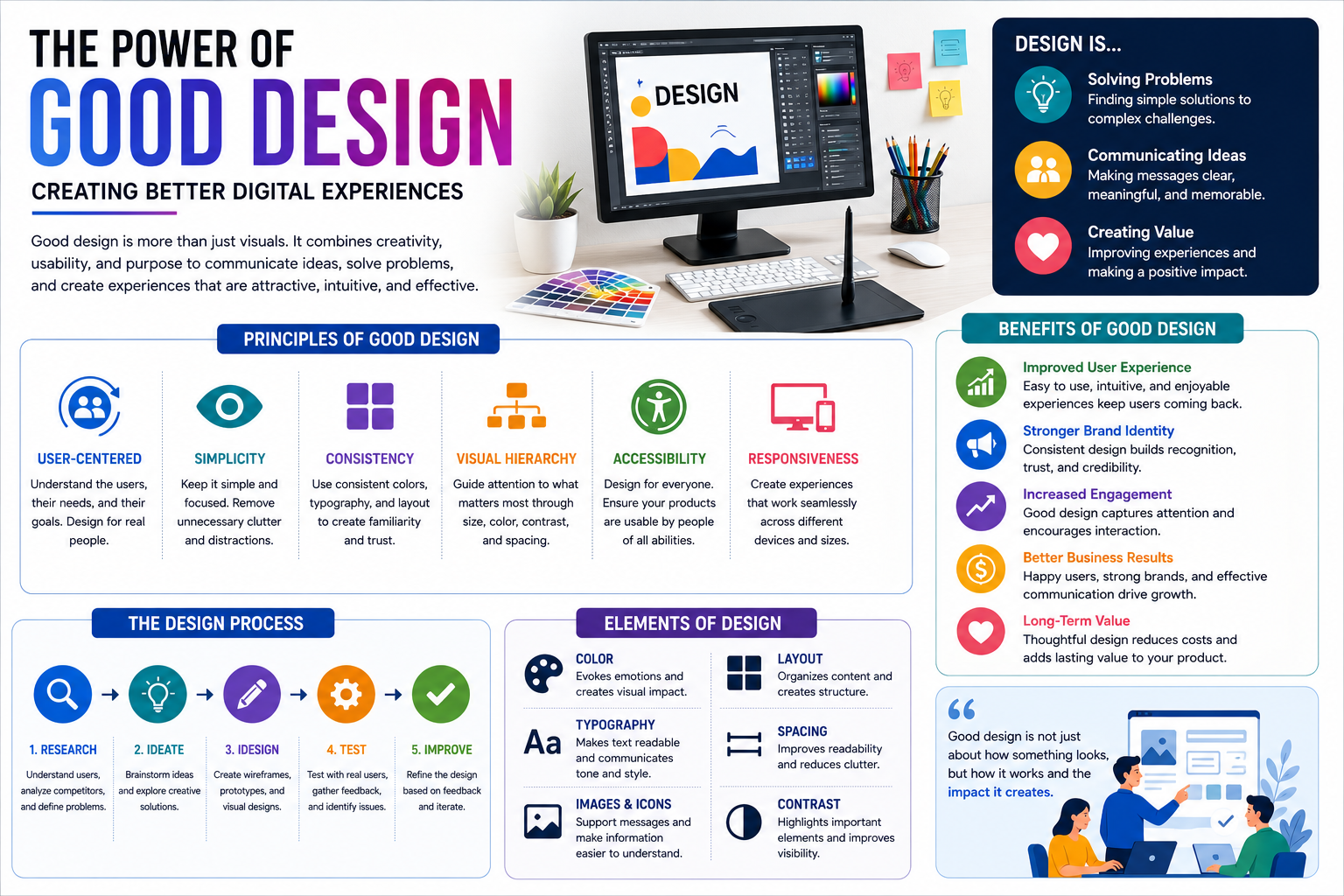
Design is an essential part of the products, websites, applications, brands, and experiences people interact with every day. Good design is not simply about making something look attractive. It is about solving problems, communicating ideas clearly, and creating experiences that are easy and enjoyable to use.
One of the most important principles of design is understanding the audience. Designers need to know who will use a product, what users expect, and what problems they are trying to solve. Research and user feedback can provide valuable insights that help designers create solutions that are relevant and useful.
Visual consistency is another important aspect of effective design. Colors, typography, spacing, icons, images, and layouts should work together to create a clear visual hierarchy. Consistent design elements make information easier to understand and help users navigate products and websites more confidently.
Usability should always be considered alongside visual appearance. A beautiful interface can still be frustrating if users cannot easily find what they need. Clear navigation, readable text, logical layouts, accessible controls, and understandable messages can make digital experiences more efficient and user-friendly.
Good design also improves communication. Businesses use visual design to communicate their identity, values, products, and services. A strong brand identity can help an organization become recognizable and create a consistent experience across websites, applications, social media, packaging, and marketing materials.
Technology has expanded the possibilities available to designers. Modern design tools allow teams to create prototypes, test ideas, collaborate remotely, and quickly make improvements. Artificial intelligence and other emerging technologies are also helping designers explore concepts, automate repetitive tasks, and create more personalized experiences.
Accessibility is another important responsibility in modern design. Products should be designed so that people with different abilities can interact with them effectively. Appropriate color contrast, readable typography, keyboard navigation, alternative text, and clear interface elements can make digital experiences more inclusive.
Successful design is usually the result of continuous improvement. Designers create concepts, test them with users, identify problems, and refine the solution. This process helps ensure that the final product meets both business objectives and user needs.
Ultimately, good design brings together creativity, functionality, accessibility, and problem-solving. Whether designing a website, mobile application, product, advertisement, or brand identity, the goal should be to create something that communicates clearly and provides genuine value. Thoughtful design can turn complex ideas into simple experiences and help businesses build stronger connections with their audiences.